What Would the Universe Miss if Zeta Space Didn't Exist?

A stretch of land can look completely trustworthy from the surface. The grass is even, the ground feels solid, and nothing visible hints that anything could be wrong. But underneath, soil can be shifting, slopes can be losing their grip, and the early signs of subsidence can already be taking shape. By the time any of it becomes visible, it is usually too late to do much about it.
This is the problem Zeta Space has built its business around, and it makes for an interesting question: what would actually be missing from the world if this company had never come to be.
The Beginning

The story behind Zeta Space began, according to Varun K, founder and CEO of the company, in Class 4, with a childhood dream of building a satellite. That spark came from E. K. Kutty, a former Director of ISRO, who ran a space club that gave curious kids a place to explore ideas that felt bigger than themselves. From there, the dream kept evolving, shaped along the way by mentors, scientists, teachers, and friends who did more than teach space technology. They gave Varun the confidence needed to believe something meaningful could actually be built.
At some point, though, the goal shifted. Zeta Space started focusing on solving real problems on Earth over building a satellite. That shift became concrete once the team started talking to governments, developers, and infrastructure stakeholders and kept hearing the same thing: nobody really knew what risks were lying beneath the land they were building on or investing in. That conversation became the turning point that led to Zeta Space as it exists today.
Reading Over Watching
Every year, infrastructure gets built, money gets invested, and communities expand without a full picture of what is happening underground. Subsidence, slope instability, flooding, and structural stress often stay invisible until they are no longer avoidable, at which point the damage tends to be permanent. Zeta Space uses satellite remote sensing and AI to catch these risks early rather than reacting to them after the fact.
There is a significant difference between pointing a camera at the Earth and actually understanding what it is trying to say, and that difference is at the centre of what Zeta Space does. Through Watchman, India's first Land Risk Intelligence Platform, Zeta Space pushes past that idea, arguing that satellites should not just observe, but help predict risk before disaster hits.
Making Complications Disappear

In a world running after more features on their products, Varun’s favorite detail is not a feature, it’s clarity. “We spent months refining how complex satellite data is translated into simple, actionable land risk intelligence.” Varun said. “Our goal is that users never have to think about the technology; they simply know where the risk is and what to do next. ”
Behind that simplicity is a lot of complexity, layers of satellite data, remote sensing, and analysis that most users will never see. Much like nobody thinks about the engineering holding up a bridge while walking across it, users of this platform are not meant to think about radar science or imagery interpretation. They are meant to get a clear answer: there is a risk here, and here is why it matters.
Trust, Not Speed, Is the Real Product
It would be easy to assume the product Zeta Space sells is data. But the real product is trust. Governments and industries are making high stakes decisions based on this intelligence, so the team would rather take longer to validate an analysis than rush out a faster answer that carries uncertainty.
That is a slightly unusual stance in a tech world that often rewards speed above everything else. Here, the opposite instinct wins, because a risk tool that is occasionally wrong is not really a risk tool at all.
An Audience They Didn’t See Coming

Zeta Space did not originally plan to work with real estate developers. The early focus was on governments and disaster management agencies. But conversation after conversation kept surfacing the same concern from developers: crores were being invested in land with zero visibility into what risks might be sitting beneath it.
That changed things. One of the more satisfying parts of the work now, by Varun's own account, is showing people that a piece of land that looks perfectly safe can be hiding risks that only satellite data can reveal before they turn into expensive mistakes.
The currency for Zeta Space has been moments where people pause, and then they say something like, “wait, this is actually possible, we can use satellite data for this?”. That reaction, watching people realize satellites are good for more than just taking pictures, is the one the team says it will not forget.
Advice for Anyone Starting Out

When asked what advice to give someone just getting into this space, Varun’s answer skipped the technology entirely. “Do not fall in love with the technology”, the advice goes, “fall in love with the problem. It's easy to get excited about rockets, satellites, and AI. I did too. But I eventually realized that technology is only meaningful when it solves a real problem for real people.”
“Find mentors. Build things, even if they fail. Stay curious. Talk to people outside the space industry because that's where you'll discover the problems worth solving. And most importantly, don't wait for the perfect opportunity. Start with what you have, keep learning, and let your work speak for itself.” Varun said.
Busting the Rocket Myth
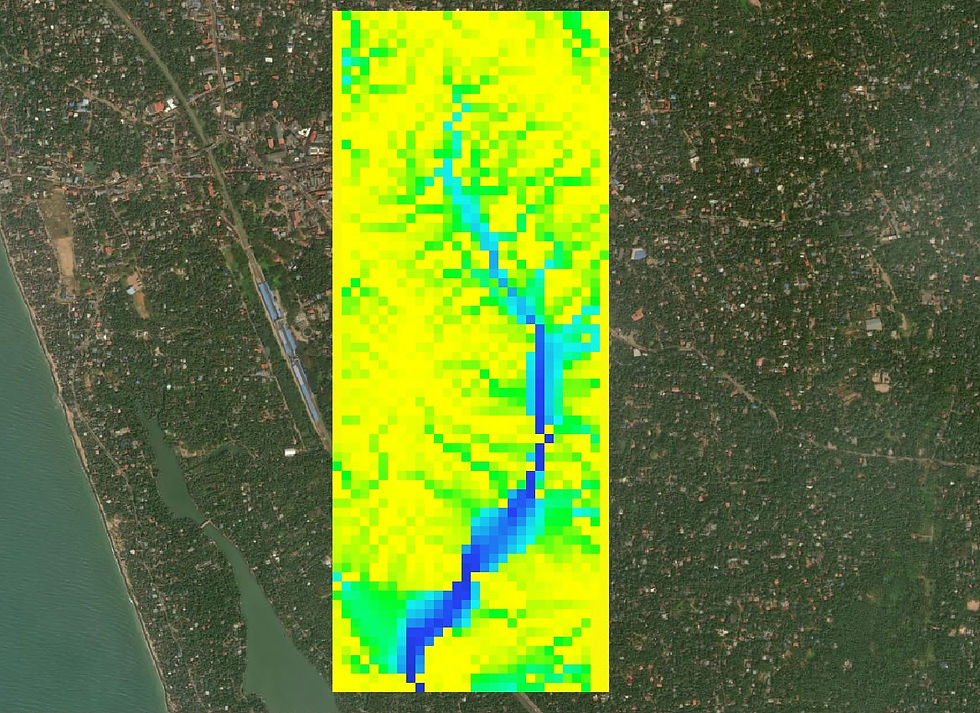
There is a persistent idea that space technology only counts if it involves building rockets or satellites, and that anyone working with satellite data afterward is "just" doing GIS or software work. Zeta Space pushes back on this directly. Turning raw satellite observations into intelligence that people can actually trust and act on requires real expertise across remote sensing, geospatial science, AI, and domain knowledge. It is deep technology in its own right.
Space technology, in other words, is not limited to being defined by what gets launched into orbit. It is just as much defined by what gets done with the data once it comes back down.
What Would Actually Be Missing
If Zeta Space disappeared tomorrow, the loss would be a particular way of thinking about resilience, one built around the idea that prevention is genuinely achievable rather than just a nice idea. Resilience, in this framing, is about catching the warning signs early enough that the disaster never has a chance to happen in the first place.
Ground movement and unstable terrain will keep happening whether anyone is paying attention or not. The gap Zeta Space fills is the one between watching and actually understanding. And Varun’s final answer to the topic at hand rounds it out: “If I had to answer the question, I'd say what the world would lose is a company obsessed with one mission - making invisible land risks visible before they become disasters.
We believe resilience isn't just about responding faster after something goes wrong. It's about seeing the warning signs early enough to prevent it in the first place. If, one day, that way of thinking becomes the norm, I'd consider that our biggest contribution.”


Comments